
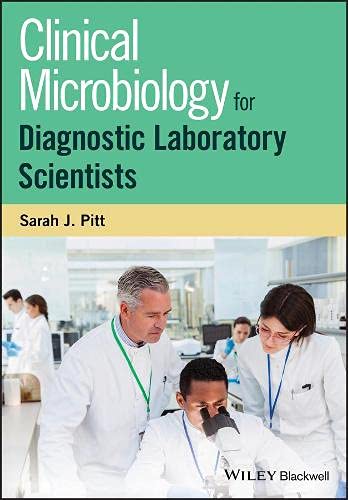
Clinical microbiology for diagnostic laboratory scientists / by Sarah J. Pitt.
Material type: TextPublisher: Hoboken, NJ : Wiley-Blackwell, 2018Description: 1 online resourceContent type:
 - text
- computer
- online resource
- 9781118745823
- 1118745825
- 9781118745847
- 1118745841
- Diagnostic microbiology
- SCIENCE -- Life Sciences -- Biology -- Microbiology
- HEALTH & FITNESS -- Diseases -- General
- MEDICAL -- Clinical Medicine
- MEDICAL -- Diseases
- MEDICAL -- Evidence-Based Medicine
- MEDICAL -- Internal Medicine
- Diagnostic microbiology
- Microbiological Techniques
- Infection -- pathology
- Microbiological Phenomena
- 616.07 23
- QR67
- SCI045000
"Clinical Microbiology for Diagnostic Laboratory Scientists is designed to encourage the reader to take a modern, evaluative and integrative approach to diagnostic microbiology and to develop a way of thinking that can be applied to any diagnostic scenario. Through consideration of a selected range of infections caused by pathogenic bacteria, viruses, fungi, protozoa and helminths, the book encourages readers to explore connections between the available information about clinical symptoms, pathogenesis of infections and the approaches used in laboratory diagnosis, in order to develop new insights. There is an introductory chapter, which outlines the scope of clinical diagnostic microbiology and the key areas for the laboratory scientist to be aware of. In the subsequent six chapters, a type of infection is reviewed in depth, using particular pathogenic microorganisms to illustrate salient points. At the end of each chapter there are three exercises related to management of a diagnostic service and assessing the suitability of test methods to specific contexts. There are no right or wrong answers to these, but the reader can discuss them with their laboratory colleagues or university tutor. Clinical Microbiology for Diagnostic Laboratory Scientists will stimulate the reader in critical appraisal of published evidence and encourage problem-solving in the clinical laboratory context, through the use of examples to illustrate clinical and diagnostic issues. The book makes extensive use of published research in the form of journal articles, publically available epidemiological data, professional guidelines and specialist websites. It therefore considers topics which are relevant to professional scientists working in the area of diagnostic microbiology"-- Provided by publisher.
"This book is designed to encourage the reader to take a modern, evaluative and integrative approach to diagnostic microbiology and to develop a way of thinking that can be applied to any diagnostic scenario. Through consideration of a selected range of infections caused by pathogenic bacteria, viruses, fungi, protozoa and helminths, the book encourages readers to explore connections between the available information about clinical symptoms, pathogenesis of infections and the approaches used in laboratory diagnosis, in order to develop new insights"-- Provided by publisher.
Includes bibliographical references and index.
Print version record and CIP data provided by publisher; resource not viewed.
There are no comments on this title.